Early April. While we slave over our edible annuals, nursing them along in our greenhouses —
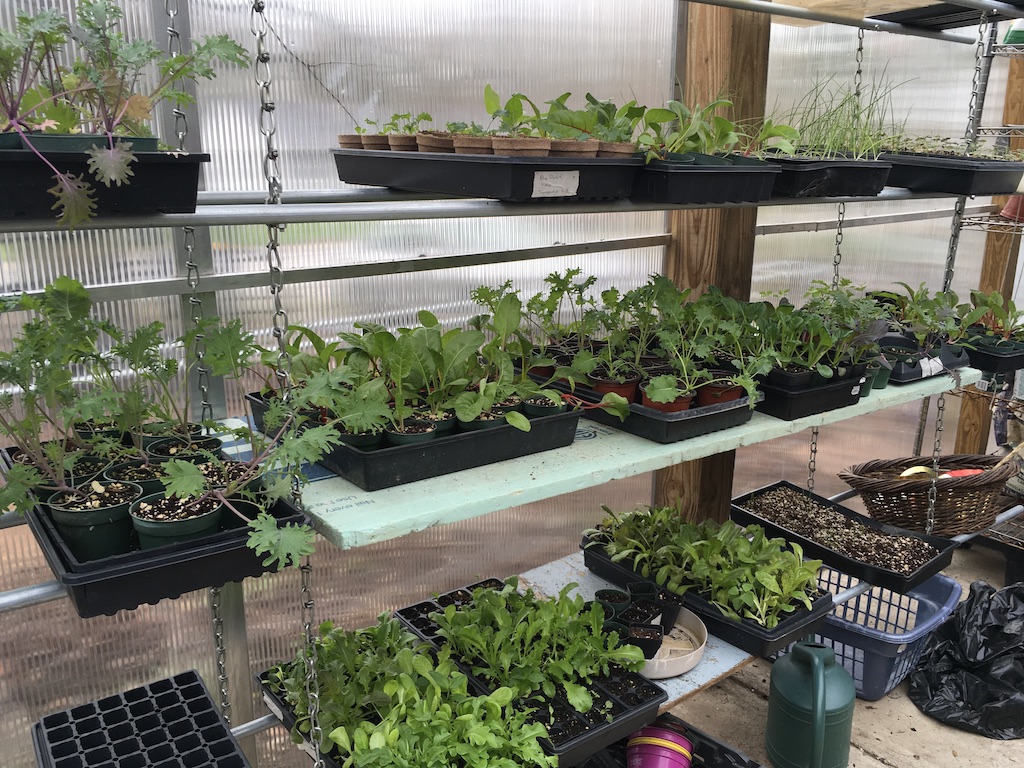
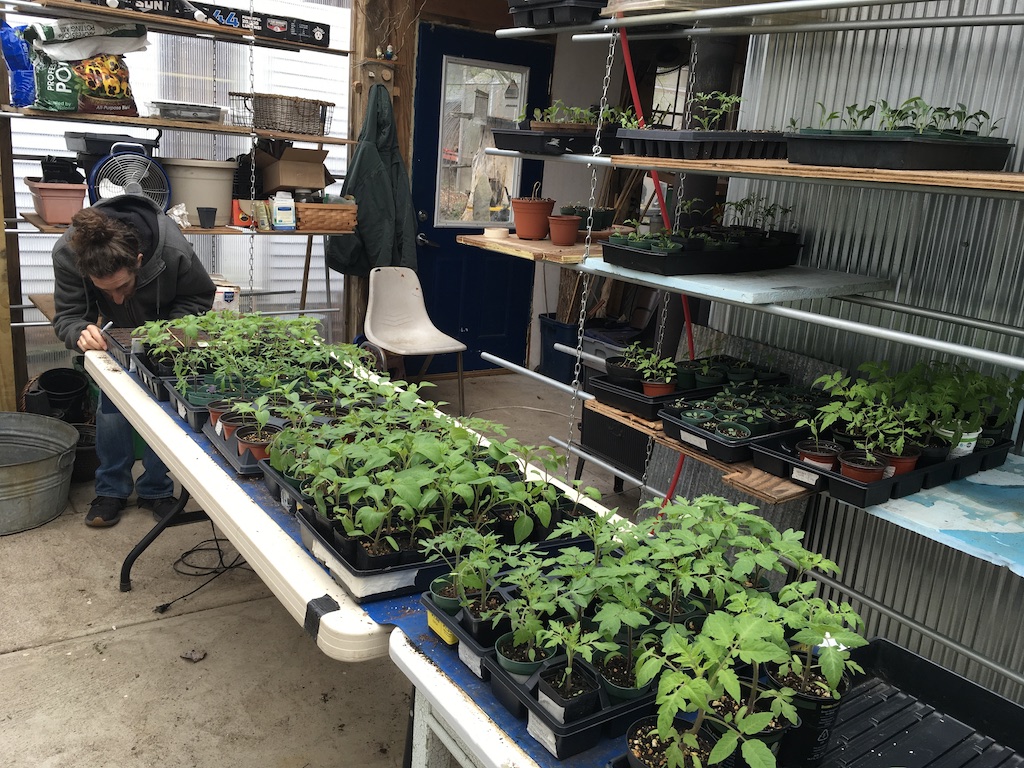
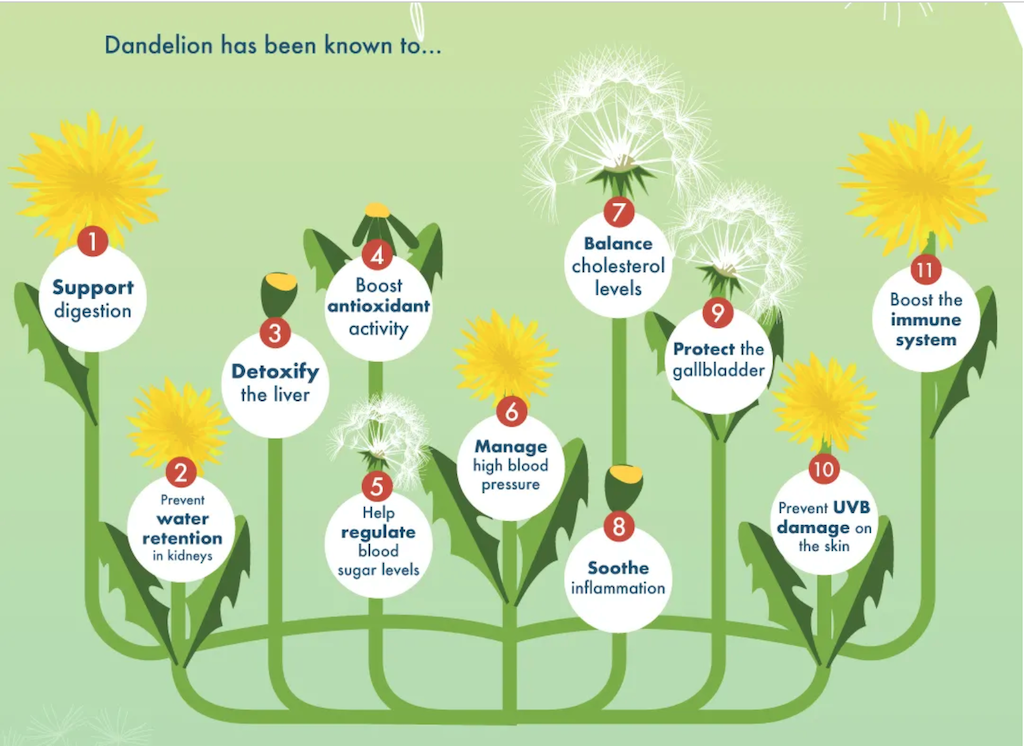
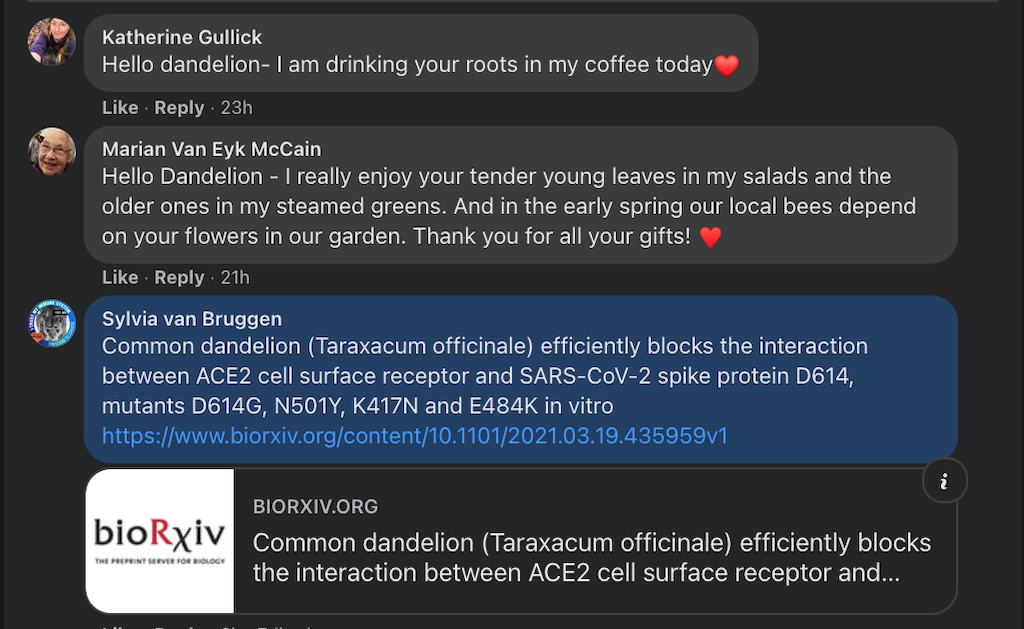
— just outside, dandelions, “the most widespread and widely recognized plant in the world” spring up, every part of them — flowers, leaves, and root — both edible and medicinal.
The presence of dandelions indicates one or more of three conditions: compact soil, soil lacks calcium, soil too acidic, or too much shade for grass to easily grow.
The first three conditions the dandelion corrects: 1) with a tap root up to 15 feet deep, so deep that it has been called an “earth nail,” 2) dandelion leaves contain calcium which when they decompose, calcifies the soil, and 3) dandelion will add alkalinity to the point where acid soil becomes neutral.
The third condition needs a special note: for it was only when “lawns” became a symbol of social standing, that dandelions got banished to the category of “weed.” “Weeds” are, in our nature-defying culture, by definition, bad; need to be eradicated with various poisons.
I’d say welcome the dandelion! For only does she feed us, and heal us, but she feeds and heals the soil as well.


”And you? My teacher looked up, his left eyebrow arched, pencil poised. 'I want to do a paper on the concept of time.’” I mumbled, timidly. 'Time?' He sniffed. “I wouldn’t touch the subject. Too difficult.” — AK, 1967

Ph.D. 83
Astrologer, published author, conference presenter, world traveler, founder & editor of Crone Chronicles: A Journal of Conscious Aging (1989-2001) , and founding visionary of Green Acres Permaculture Village (2010 to present).
Copyright © 2025 All rights reserved.


I love this Ann about the dandelions. I had no idea how beneficial that they were for the soil. This was so informative. Thank you