
Ann Kreilkamp 8:24 pm
I have just violently interrupted myself from digging further down a new rabbit hole having to do with news of David Wilcock’s death, a reported suicide on April 20. Frankly, that “news” felt awful to me. For years now, I have sensed that he was “losing it,” going “off the rails,” and so had stopped paying attention to him. But way back when? In the years leading up to 2012 and when he and many others assumed the world would suddenly change for the better? I was decidedly a fan. In fact, I just looked up David Wilcock on my archival site, exopermaculture.com, and there are at least two dozen posts over the years.
When he got together with Corey Goode (another whom I paid attention to, until I didn’t; and then the broohaha on gaia.tv. . .) I soon started to lose interest.
For the last few years, I would tune into Wilcock’s three hour broadcasts once in a while for a few minutes and was always struck by how lonely he seemed, how out of sorts, despite his grand plans. Don’t have time or inclination to go into details here; in fact, I’m pissed that I fell down that rabbit hole today, feeling bad for him that he killed himself, if in fact, he did. I do wonder: was his “death” another psy-op, meant to distract a certain segment of the public for some purpose or other? Did he really die? If so, did he kill himself? Was he targeted in some way? If so, by whom? If not, why not. And how come his biographer, Wynn Free, died only two days earlier? Weird. On and on.
The point is, I tended to be a member of the new age horde that included David Wilcock for a number of years. He was the one who introduced me to (channelled) The Law of One material, which I still, on an intuitive level, appreciate.
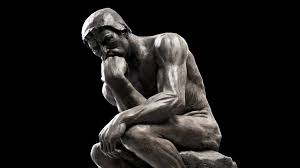
Meanwhile, I said in yesterday’s post that I would return to the alt-epistemological theme I picked up on then, by speaking about what I notice about myself in relationship to a serious academic friend who apparently forgets nothing of what she reads — and can instantly lay out numerous complicated threads that weave together an entire sub-section of the complex, entangled historical web of “western philosophy” — though she also makes fun of her academic peers, citing how gullible they were during the covid con.
During a recent conversation with her, also when Mars was heading into Mercury, I found myself internally furious. Only later did I begin to understand why. My own views are, and have been ever since I wrote and defended my PhD dissertation, organically based on plumbing my awareness of day-to-day nitty-gritty experience, as operating within what I ask to be an ever-enlarging, mutating, and deepening world-view over more than eight decades.
While I went through the rigors of academic training in philosophy, back in the late ’60s and early ’70s, I never could get my fiery, independent mind to embrace others’ ideas wholeheartedly.
In fact, during my first year as a graduate student, while still a shy, good girl, thinking I would go for the MA, one of my professors (who turned into my teacher) suggested that I try an experiment. And that was to follow a certain protocol studying for the PhD qualifying exams without reading the ultra-long list of books recommended. Only second year students were to take this exam. I was first year. So, he said, if the experiment doesn’t work, you can always take the exam again next year by reading all the books.
His protocol: collect all the old exams from years past (they were in the files, available to all, in the Boston University Philosophy Department) and just start reading the questions and responding to them: “What did that question mean?” Okay. Write about that. Make up stuff. Don’t worry whether I’m “right” or not. Just start thinking and writing down what I think in response to questions. See what happens!
He was gambling on the idea that teaching me how to think would guarantee that I passed the exams.
So I did. My mother-in-law came for two months to take care of my small sons so I could concentrate on writing. Answering questions as noted in the exams. I would focus for a minute or two on each question and then just pick up my pen. Sometimes having no idea what I was going to write until it started. This practice opened my right brain.
The time came to take the exams, five of them stretching over five mornings: epistemology, metaphysics, etc. For each one, I just did the same thing I had done while loosening my brain over those two months: just think about the question and fearlessly respond, in writing. As he had told me, “After all, this is philosophy! There is no right or wrong answer.”
Then came time for the history exam, one which I knew would include a historical figure that I had specialized in. I had chosen a philosopher for which I would have to do the least amount of actual reading. I don’t remember who that was now, either Leibniz or Spinoza.
Just asked AI: “which one wrote more, Leibniz or Spinoza?”
Leibniz.
So I must have concentrated on Spinoza.
The history exam time came and I was asked to concentrate on the Ethics of the philosopher I had chosen. Ethics? But I thought what he was famous for was his metaphysics: monistic pantheism. (And yet, I see now, Spinoza’s famous work was called Ethics!)
In any case, back then, I had paid no attention to his Ethics in studying him, since what intrigued me, and still does, I realize, was monistic pantheism!
So when the time came to tackle this big question on the History exam, I panicked: said I had to go to the bathroom. And while sitting there on the toilet got furious, thinking that ethics was not his big deal, pantheism was!
When I got back to my seat I started writing furiously, saying the question itself was absurd, because what is important about Spinoza is his pantheism, which I then proceeded to describe.
And guess what?
I aced the exams!
Unfortunately, my teacher then bragged to the rest of the department about his success in preparing me in such a thoroughly unorthodox manner. And then, the next year, he again urged two really smart students to follow my example. Which they did.
And wouldn’t you know, they both “failed.”
Yup! Departmental politics did them in.
Note: I’ve had this experience all my life. It helps to be the first. By the time the second one comes along, the powers-that-be are prepared to shut the experiment down.
So you see that I’m not really geared to study other people’s ideas, and BTW, refused to footnote my PhD dissertation, wherein I had described the two prevailing methods, either deductive or inductive, which academic philosophers use to absorb and judge other philosophers’ ideas. I wasn’t interested in either method. My work with Wittgenstein was, rather, immersive. I immersed myself, body, mind and soul, into his written works, finding in them his body, mind, and soul. Instead of “studying” Wittgenstein’s ideas, I identified with him as a person. Given who he was, the incredible complexity and paradoxical nature of his intensely isolated, brilliant self, how could he think?
When I brought the completed dissertation back to my teacher, it had no footnotes. That, plus the title, This Is Not A Book About Wittgenstein, was all that I was forced to change.
To get the required footnotes, I just went to the library for several afternoons, and looked up examples of philosophers, both past and present, who did or do think in which way, deductive or inductive, noting both primary and secondary sources. In fact in one footnote, I documented how one philosopher had plagiarized another about a third philosopher’s ideas.
And that’s pretty much how I “studied” philosophy, and still do.
My academic friend, however, appears to have exceptional, and very articulate recall of every philosopher, both original and secondary sources, their relations to one another, both philosophically and in time and space. We are not the same.
So, when I started to tell her something about what I was experiencing lately, and the lessons I was drawing from it she countered (it seemed to me) with how so and so philosopher(s) had realized the same thing, and how in fact, there is a tradition going way back of that kind of thinking, etc. etc.
The result, for me: I thought she thought I was stupid. Though I know that isn’t true. In fact, she keeps wanting me to publish more of my own work.
And yet, I would love for her to integrate her own personal experience in some of her philosophical peregrinations. That to me, would be revelatory.
With Sun and Ascendant in Sagittarius, personal seeking is always the direction for me. But with academics, I do NOT get personal experience. I get instead, mediated experience, at least once removed.
Our purposes diverge. I want to know who she really is. She wants to give me what she has learned about what’s outside herself.
Yep. I was and am talking about my experience; and I sure wish she would talk about her experience! Then we could really delve deep. Otherwise, I keep talking about my experience, and she keeps talking about how whatever I say has historical antecedents, which are voluminous, so that yes, “there’s nothing new under the sun.”
And, unless I let it go, or even better, unless I appreciate the rich historical context she offers me each time we enter one of these conversations, I will continue to feel shut down. But then, that’s my problem, not hers.
”And you? My teacher looked up, his left eyebrow arched, pencil poised. 'I want to do a paper on the concept of time.’” I mumbled, timidly. 'Time?' He sniffed. “I wouldn’t touch the subject. Too difficult.” — AK, 1967

Ph.D. 83
Astrologer, published author, conference presenter, world traveler, founder & editor of Crone Chronicles: A Journal of Conscious Aging (1989-2001) , and founding visionary of Green Acres Permaculture Village (2010 to present).
Copyright © 2025 All rights reserved.


