
Astrologer, published author, conference presenter, world traveler, founder & editor of Crone Chronicles: A Journal of Conscious Aging (1989-2001) , and founding visionary of Green Acres Permaculture Village (2010 to present).
Just over three months ago, on the August 22nd Full Moon, the LAF Meditations were born, asking that participants go into meditation, to help alchemize F.E.A.R. (False Evidence Appearing Real) into LOVE, at 8 AM, every Sunday, your time, across the world.
I don’t know how many have participated in this practice. All I know is that I have been doing it for months now, South America to North America, with my friend Janet, via the phone. During these three months, she and I have noticed the synchronicities in both our experience of the week just past, and our meditations themselves. Plus, the meditations have been mutating all along, beginning with a mutually felt need to go deep inside the Earth, bringing LOVE into the contracted sludge of FEAR that has been building up over decades, centuries, millennia.
Digging down took a number of weeks, and was preceded by our decision to first, prior to formal sitting meditation, express through actual, loud, physical howling all the desperation, fury, despair that lies buried inside the collective body/mind and seeks release.
We howled prior to meditating for about five weeks.
Two weeks ago, we “forgot” to howl first — and noticed only a few days later, that howling was no longer on the LAF agenda for us.
What happened next I am only beginning to speak about, the need for a much fuller expression of LOVE energy within which to bathe this globe. And for me, this means SONG. More on this in the next few weeks.
Meanwhile, today, prior to calling her, I was thinking of asking Janet whether she thinks we should make the transition now, in the sense of not meditating this morning, but continuing to prepare for the alternative we’d already discussed: SONG expression.
But when I called her at 8:00 AM precisely, I couldn’t get through.
A few hours later, I came back from walk with puppy Shadow. Still no phone message. But, geez! A single short sentence via internet: WE HAD AN EARTHQUAKE.
Ye gods! I looked it up, and yes indeed, a 7.5 earthquake near where she is located.
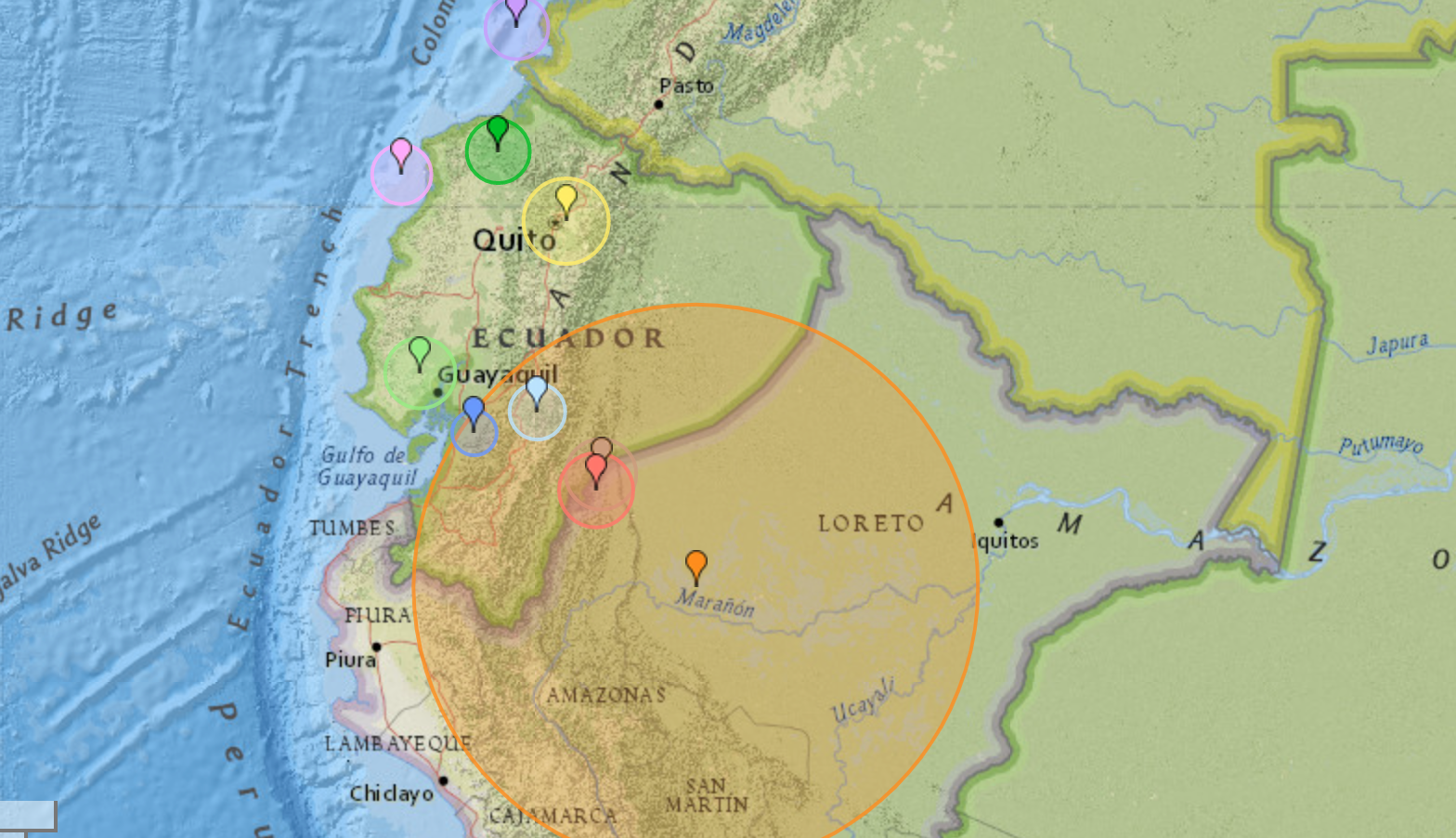
See orange symbols. That’s the quake zone for today.
She’s fine; as one who grew up in California, she knows exactly what’s happening when the earth moves. Grabbed her winter jacket, donned her new Christmas jammies with flip flops, and took the stairs down five flights, to outside, where she noticed the other tall buildings, and decided to walk a few blocks in a different direction. This happened about an hour before we were due to talk. That earthquake, to me, is another confirmation that we are to begin to make another LAF transition!
Just remember, no matter what particular practice we are currently, in the past, or in the future, involved in, it’s all a LAF, intending to expand the heart to the point where we channel LOVE TO ALCHEMIZE FEAR.
Meanwhile, my dearest, oldest friend Claudia, with whom I spoke on the phone yesterday, tells me that she has been singing in her heart for a few weeks now, this:
The lyrics (and those singing them) here:
Another synchronicity! I told her about what’s going on with me, and that I am practicing singing. Told her she could likely also bring her originally beautiful voice back, simply by practicing.
As you may have guessed by now, I suggest that it’s time we begin to remember how to sing, singing songs that express the divine love through our hearts — alone, together, and across the world. Songs of praise. Songs are prayers.
And guess what? I have a sense that this fractured, covidized culture, as it stands now, would not only appreciate but even embrace a return to the old Christmas tradition of caroling the neighborhood. YES!
How about on the Solstice, December 21? Just sayin’!
Makes me wonder: what if “they” are laughing at us, wondering just how long we the people will agree to try to tread water inside the hypnotic spell cast over us by the continuous drumbeat of the Covid Con and its endless “variants, ” rolling out, one after another, requiring booster after booster, with each new variant vitiating the current “vaccine passport” until 95% of the world’s population is either dead or the walking dead?
Search: “Depopulation Agenda.” And then, the question, as always, is why? Who stands to benefit? And I’d wager it’s not just the profit motive driving this unprecedented hoodwinking of the world’s population.
Check this out, from Kerry Cassidy:
https://projectcamelotportal.com/2021/04/23/covid-the-path-to-the-transhuman-agenda-humanity-3-0/
Oh, but wait a minute? Is it Omicron or Omnicron? If there’s a choice, I’d rather call it OMNI-CON.
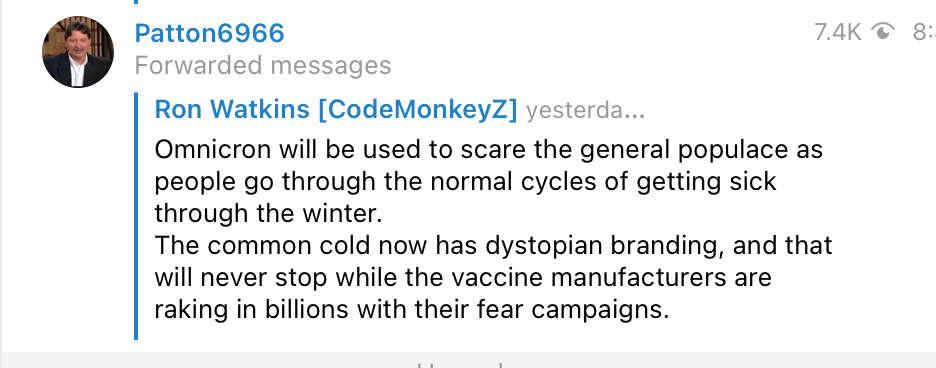
Prior, by now well-known, research discovered:
The PCR test was not designed for diagnostics, and the way it is used, gives mostly false positives.
Hydroxychloriquine and ivermectin, in appropriate doses, are extremely effective both prophylactically and as cures for those with “Covid” (or some dis-ease that they call Covid). But, they are both vilified, even banned.
These two above facts, should be enough for anyone who thinks for him or herself to begin to deeply question this entire scenario that began casting its spell nearly two years ago.
I’d add another, to me, obvious consideration: the brilliance of the body’s natural immune system, which depends entirely on one’s state of health in general: body, mind, and soul. Our habits, of eating, drinking, drugging, sleeping, Vitamin supplementation, stress-levels, weight, daily exercise, meaningful work, time in nature, purposeful life . . . None of these considerations are even mentioned by the usual MSM and the indoctrinated Rockefeller-founded allopathic medical apparatus!
More puzzling facts:
The flu dropped to near zero in 2020, due to re-branding as Covid.
The distinction between “dying of” Covid and “dying with” Covid is still seldom recognized.
A person is considered unvaccinaated until two weeks after their second jab and: most deaths and serious adverse events take place within the first few days.
Official hospital protocol — remdesivir plus respirator — usually results in death.
I could go on and on. What about the poisonous ingredients in the jabs — including spike proteins and graphene oxide (which I now hear is added to the plastic capsules Big Pharma uses to package its drugs)?
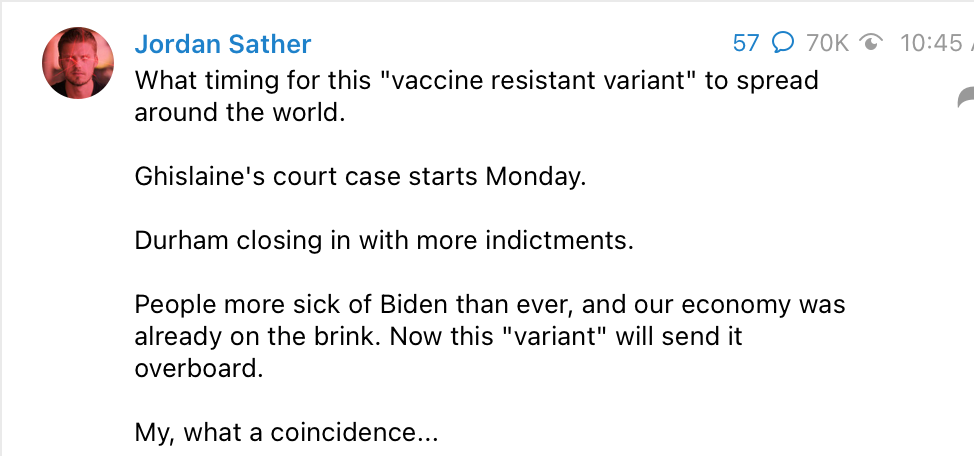
Oh yes, and did you notice just when this latest joke of a “variant” was introduced? Yesterday. Just after the Kenosha/Waukesha combo, and just prior to the Ghislaine trial, which begins Monday, November 29th!
Jordan Sather, like large numbers of us “truthers,” also noticed the timing and adds two more:
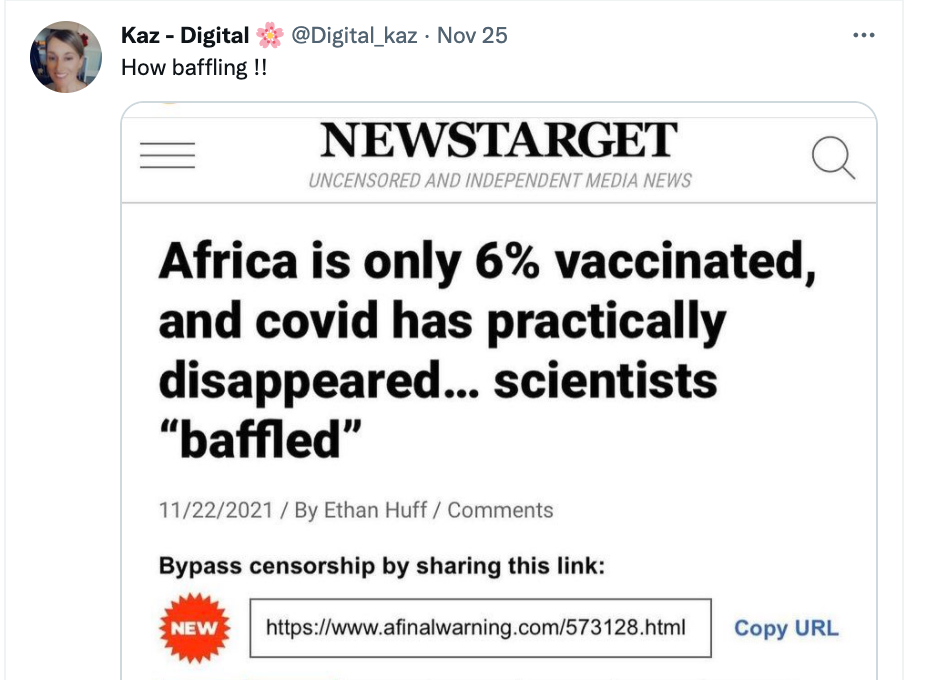
Did you notice that the would-be globalists chose Africa as the continent on which to say this so-called new “variant” originated (reminding us of the myth of how so-called AIDS arose, another Tony Faux-ci driven tragedy with a “cure” — AZT — that killed), which happens to be a place with very little COVID, as well as — or because of? — a tiny percentage of the people vaccinated?
And further, that those said to be suffering from this so-called Omicron variant are vaccinated?
Hmmm . . Does the vax itself cause the Covid and its variants?
Remember, nobody, not a single lab in the entire world has ever been able to isolate the virus said to cause Covid-19, and yet they say they can figure out its variants, including Delta (which also, yes, seems also to be “arising” mostly or only among the vaccinated).
Oh wow, and just as the Biden-puppet’s mandate in the U.S. is rolling out for young children, we find that this South Africa variant targets them!
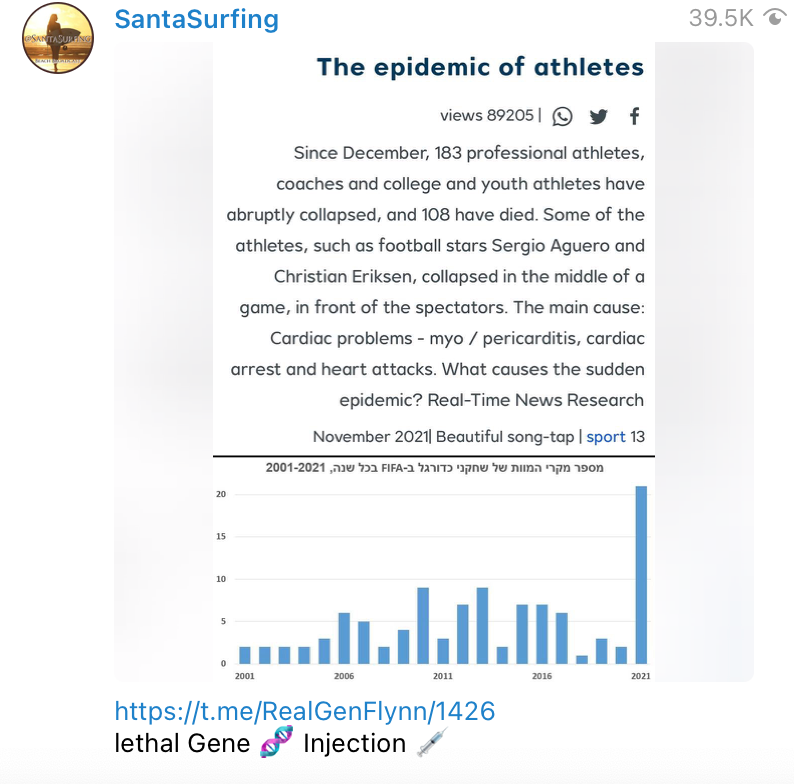
Plus, young vaxxed athletes have been dropping like flies in full public view . . .
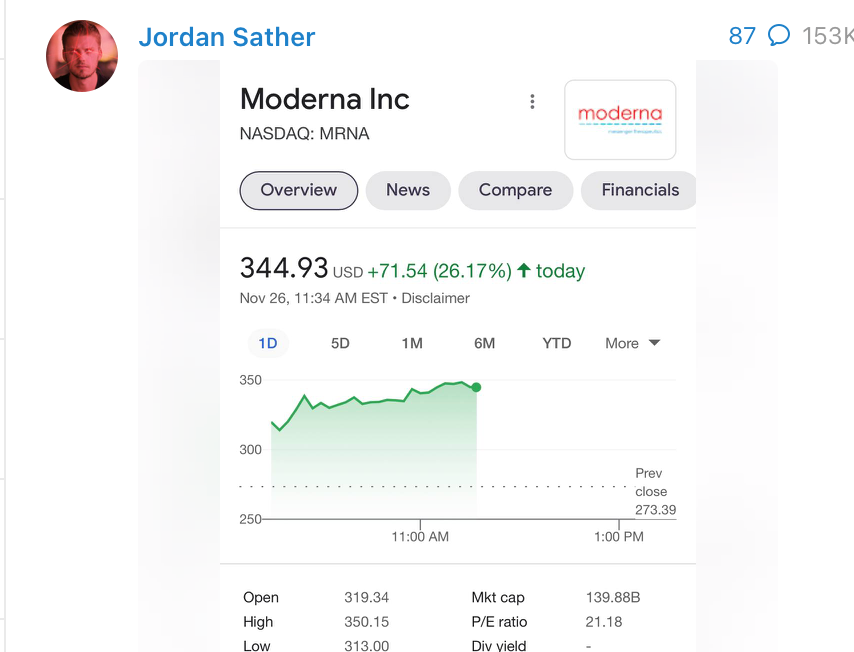
Did you wonder about insider trading in the days before the African variant was announced, with Moderna suddenly going up 26% yesterday, Black Friday, the same day the stock market itself tanked nearly 900 points — due to knee-jerk fearful reactions among traders?
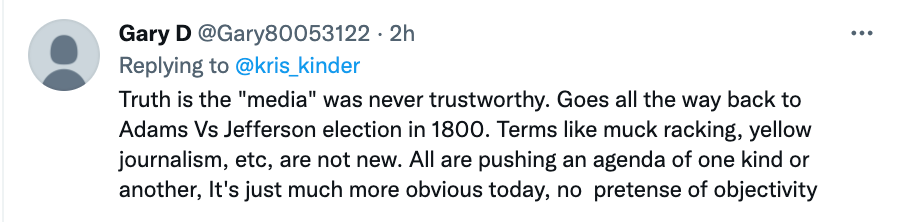
How many people are waking up during this extraordinary time when false flags and other agenda-driven events and statistics, whether real or fake, dominate the MSM? A question which translates to, how many people still get their “news” from the CIA-infiltrated propaganda machine? Remember:
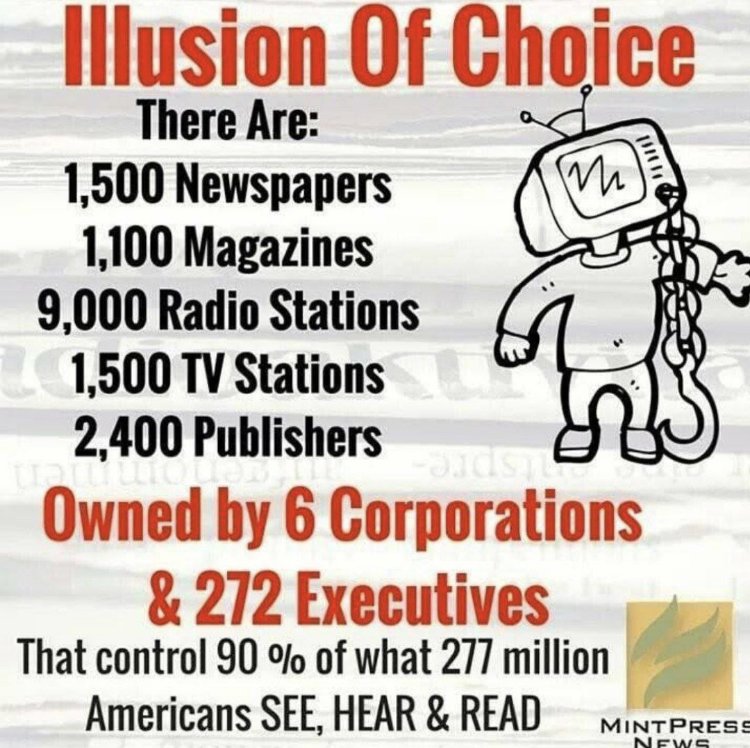
This is nothing new.
Hmmm . . . is it true that Joe Rogan now gets more viewers than the MSM? Here’s one analysis.
Is Joe bigger than mainstream media? Here is the evidence
byu/SoundShark88 inJoeRogan
However, if Clif High and other “influencers” are correct, then despite increasingly draconian appearances, the tide has, actually turned. Look, for example, at this:
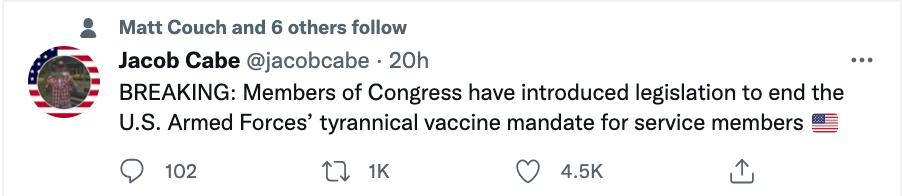
But what does that mean, to say “the tide has turned”? As usual, Clif fascinates:
”And you? My teacher looked up, his left eyebrow arched, pencil poised. 'I want to do a paper on the concept of time.’” I mumbled, timidly. 'Time?' He sniffed. “I wouldn’t touch the subject. Too difficult.” — AK, 1967
Ph.D. 83
Astrologer, published author, conference presenter, world traveler, founder & editor of Crone Chronicles: A Journal of Conscious Aging (1989-2001) , and founding visionary of Green Acres Permaculture Village (2010 to present).
Copyright © 2025 All rights reserved.


[…] She sets the chart for Washington, D.C., which puts…