
Astrologer, published author, conference presenter, world traveler, founder & editor of Crone Chronicles: A Journal of Conscious Aging (1989-2001) , and founding visionary of Green Acres Permaculture Village (2010 to present).
Back in the early 1970s, when I was in my 30s, I was briefly married to my high school boyfriend. Dick had become the Editor of our local hometown newspaper. Marrying me brought him mostly private controversy — though I do remember writing a letter to the editor that took issue with “the news” that several people agreed with, in print.
What was bothering me: as I walked or biked around my home town, I had many experiences with others that I would call “good news.” My own experience made me realize that the world is full of good news, just as much as it is full of bad news. But bad news, my husband told me, is what sells. People are looking for the bad news, not the good news. Well, I wondered, why is that?
Here’s a post I wrote on the subject back in 1996.
Excerpts:
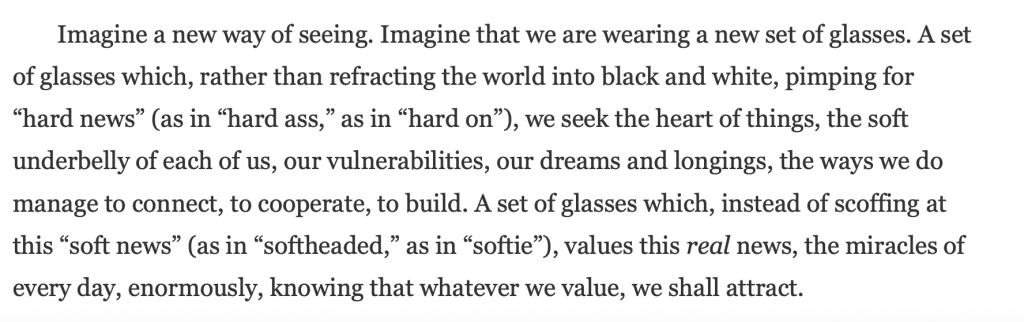
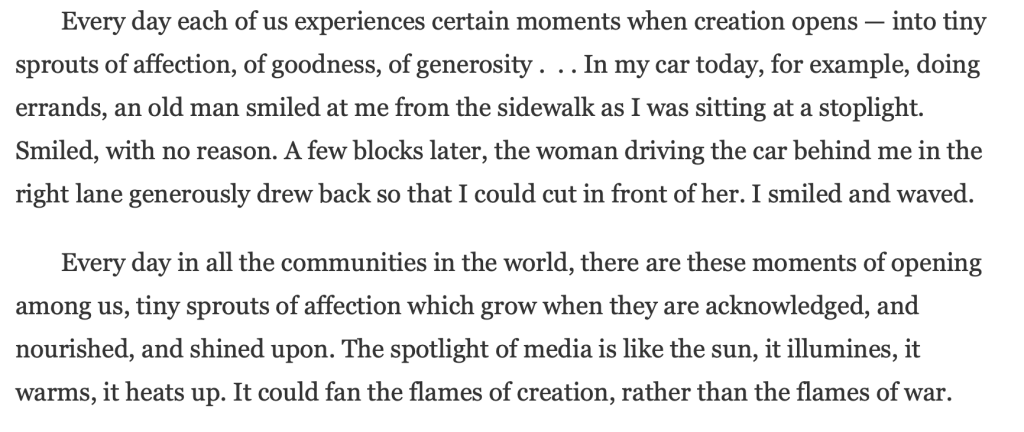
Here we are, decades later, near the end of 2025, and not much has changed. Or has it?
Actually, much has changed. Mainstream media is going downhill, fast. The internet has opened us to an infinity of points of view, which means: it’s up to each of us to decide what “news” we want to count, to reference, to amplify.
For me, three accounts on Twitter/X stand out at this point:
Mr PitBull
Crazy Vibes
Mr Commonsense
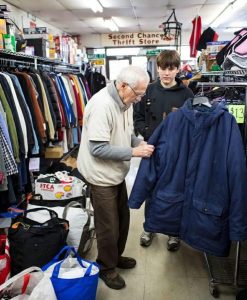
Each of these accounts tells stories, of strangers interacting with each other in magnanimous ways. And often, what someone does others notice, and then, as “one thing leads to another,” the original magnanimous action ends up blossoming into community.
Each of these stories warms my heart. I always repost them.
Now of course, some of these stories could be made up, not real. But I say, it doesn’t matter. Even imaginary stories like these help us grow into truly human beings, radiating love.
Here, for example, is one of Mr PitBull’s wonderful stories:
https://x.com/MrPitbull07/status/1994355106654159278
Oh, let’s just relax, okay? Complain about silly things . . .
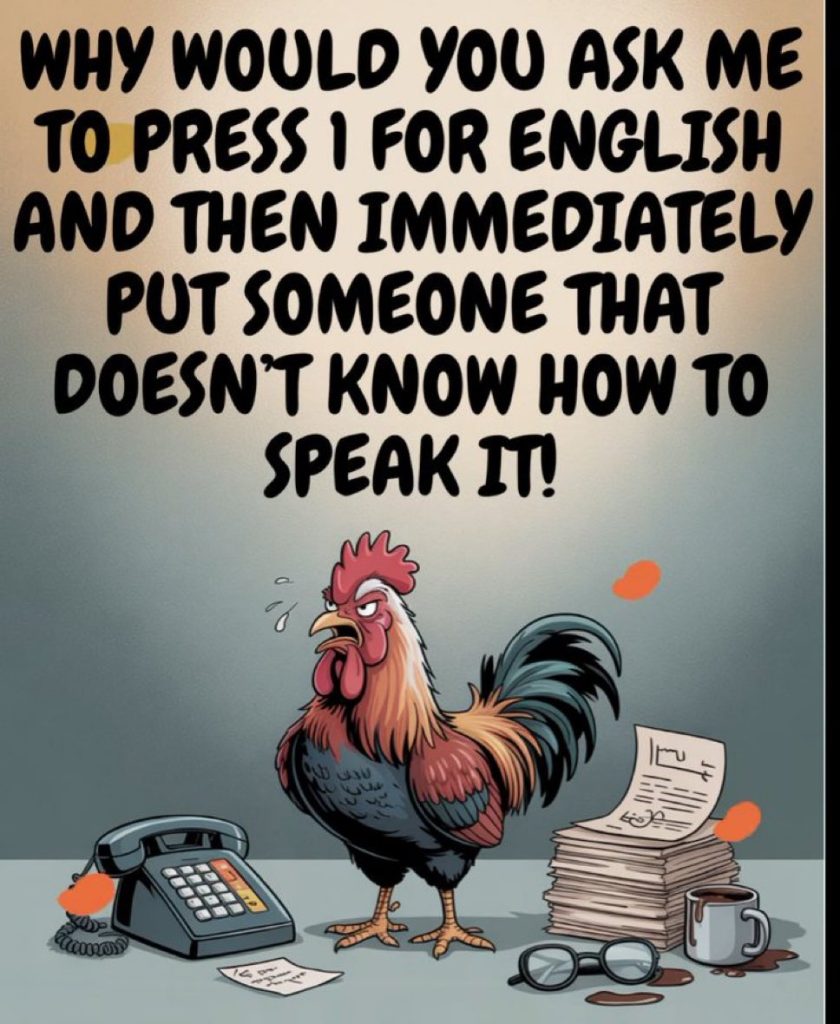
After all, it’s the internet, dummy? What can you expect?

The internet charges words to be ever more lethal and/or soothing.
Language is the weapon of choice for those who feel utterly impotent.
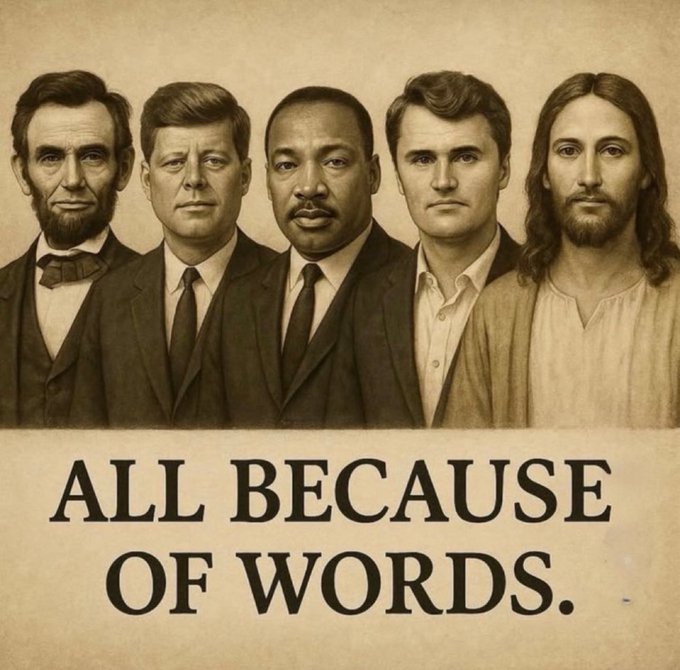
On the other hand, think of the relative value of 3D memes versus mere 2D word strings! Memes include, usually, words plus images, used to convey fact, fancy, speculation, contradiction, expansion, contraction, dilemma, etc. in ways that words alone cannot muster. One might say that memes double? triple? quadruple? float into higher or lower dimensions? meaning conveyed by mere words. Furthermore, the “meaning” of any meme does seem to be dependent upon just who is picking up on it. I’ve heard that most “leftists,” for example, just don’t “get” (I would say “grok,” except that word has now been hijacked) the meaning — the intended significance — conveyed by memes. True?
Meanwhile, on my daily walks, I regularly pass by young obese female bodies clutching phones, most of them parading gigantic stomachs, butts and thighs with skin-tight pants, having absorbed our culture’s politically correct fat-shaming no-no.
RFK jr says 74% of Americans are obese! Ye gods! True?
https://www.instagram.com/reel/DOQRL27DRot/
But of course, this latest body culture brainwashing vibrates in dynamic contradiction to its polar opposite: the desire to “lose weight.” In which case, just think of how obesity feeds Big Pharma.
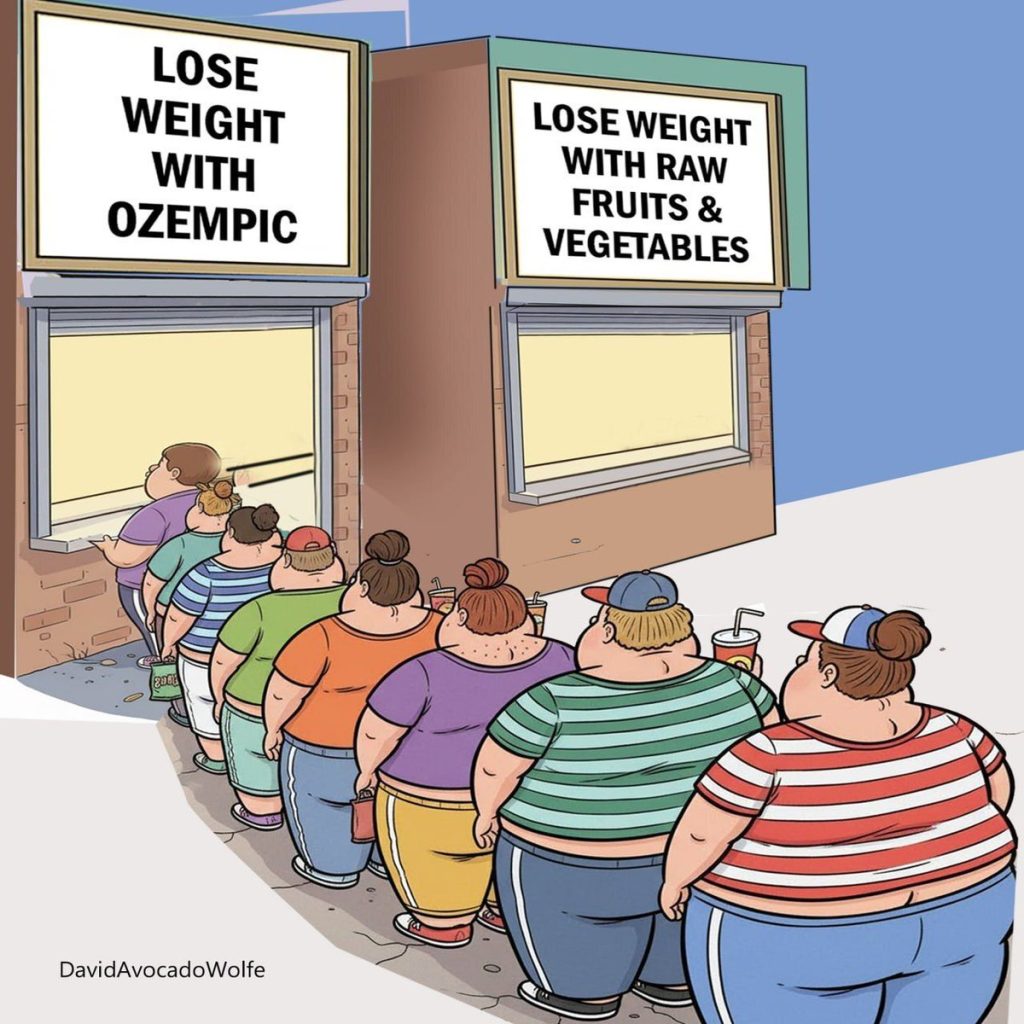
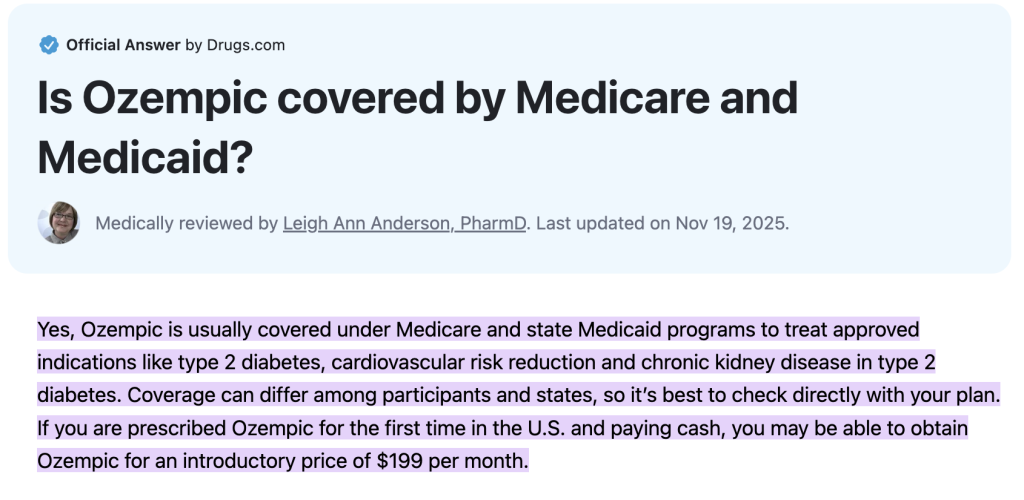
And we all know, or should know, the many dis-eases that result from obesity, covered by Medicare and Medicaid, no less. In other words, we, the taxpayers, whether or not obese, pay for it.
Two fairly recent themes:

And it certainly can be argued that ICE is too brutal in its approach. On the other hand, remember, Trump has less than three years to complete the job of deporting the millions who arrived here illegally, before this invasion can obliterate the United States of America.

On the other hand, its becoming more and more obvious that the class division between “higher” education and and trade apprenticeship must dissolve. Or, I should say, their relative values reversed?
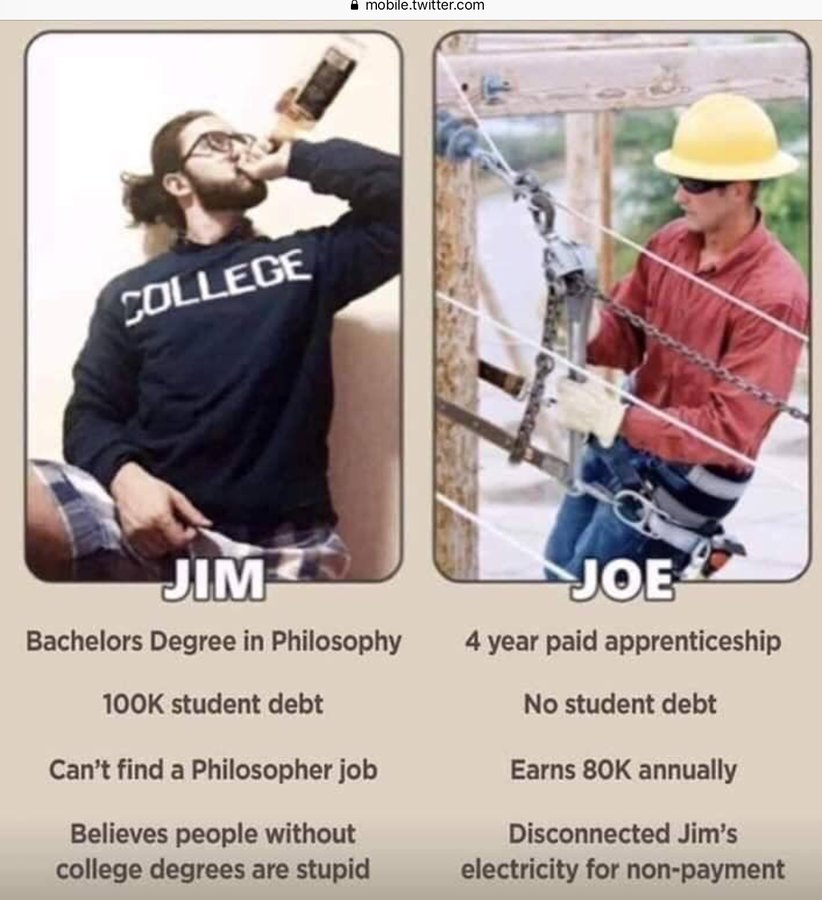
Palantir gets it.
https://x.com/cultureexplorex/status/1995907760245145798?s=61&t=aUBDiSUrvn0aSlRBtZx0wQ
Lots goin’ on, ‘eh?
”And you? My teacher looked up, his left eyebrow arched, pencil poised. 'I want to do a paper on the concept of time.’” I mumbled, timidly. 'Time?' He sniffed. “I wouldn’t touch the subject. Too difficult.” — AK, 1967
Ph.D. 83
Astrologer, published author, conference presenter, world traveler, founder & editor of Crone Chronicles: A Journal of Conscious Aging (1989-2001) , and founding visionary of Green Acres Permaculture Village (2010 to present).
Copyright © 2025 All rights reserved.


[…] She sets the chart for Washington, D.C., which puts…